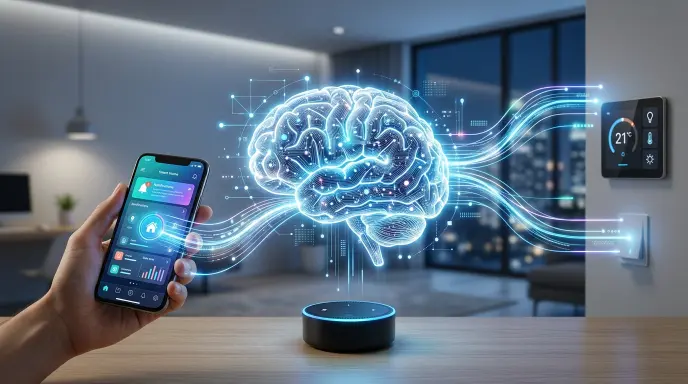
Artificial Intelligence Benefits are becoming more visible in everyday life, even for people who do not actively use advanced technology. From simple mobile apps to complex business systems, artificial intelligence is quietly changing how tasks are performed, decisions are made, and information is processed.
At its core, Artificial Intelligence Benefits refer to the advantages people and businesses gain from systems that can learn, analyze, and make decisions with minimal human input. While it may sound technical, most people already interact with AI daily without realizing it.
Artificial Intelligence Benefits in Daily Productivity
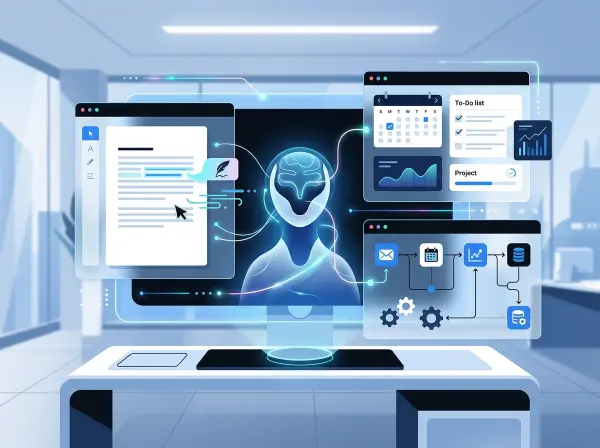
One of the most noticeable Artificial Intelligence Benefits is improved productivity. AI tools help reduce time spent on repetitive tasks, allowing people to focus on more meaningful work.
For example, email platforms now use AI to filter spam, prioritize important messages, and even suggest quick replies. Writing tools can also help users generate ideas, correct grammar, and improve clarity in seconds.
In work environments, AI-powered scheduling tools can automatically organize meetings based on availability, removing the stress of back-and-forth planning. This alone saves hours each week for many professionals.
Interestingly, many users describe AI tools as “silent assistants” because they work in the background without requiring constant attention. That feeling of subtle support is one of the strongest Artificial Intelligence Benefits today.

Artificial Intelligence Benefits in Communication and Creativity
Another major area where Artificial Intelligence Benefits are clear is communication. AI is now embedded in messaging apps, translation tools, and customer service platforms.
Real-time translation tools allow people from different languages to communicate more easily. This has reduced barriers in global communication and made online interaction more inclusive.
In creative industries, AI is also becoming a support system. Designers use AI tools to generate layout ideas, writers use AI for brainstorming, and musicians use AI-assisted software to explore sound patterns.
That said, AI does not replace creativity. Instead, it enhances it. Human input is still needed to refine ideas and ensure originality.
Artificial Intelligence Benefits in Business and Decision-Making
Businesses experience some of the strongest Artificial Intelligence Benefits, especially in decision-making and data analysis.
AI systems can analyze large amounts of data in seconds, something that would take humans hours or even days. This helps companies understand customer behavior, predict trends, and improve services.
For example, online stores use AI to recommend products based on browsing history. Streaming platforms suggest movies or music based on user preferences. These systems improve user experience and increase engagement.
In customer service, AI chatbots can respond to common questions instantly, improving response time and reducing workload for human agents.
Artificial Intelligence Benefits in Everyday Life
Beyond work and business, Artificial Intelligence Benefits are also present in daily life.
Smartphones now include AI features such as facial recognition, voice assistants, and camera enhancements. These features make devices easier to use and more efficient.
Navigation apps use AI to predict traffic and suggest faster routes. Even social media platforms rely on AI to show personalized content based on user behavior.
While these systems are convenient, they also raise questions about privacy and data usage. Users often trade personal data for convenience, sometimes without fully realizing it.
Limitations of Artificial Intelligence Benefits
Even though Artificial Intelligence Benefits are significant, AI is not perfect. It still depends heavily on data quality, and it can make mistakes when information is incomplete or biased.
Another concern is over-reliance. Some people may depend too much on AI tools and lose certain problem-solving skills over time. This is why balance is important.
AI should be seen as a support system, not a replacement for human thinking. It works best when combined with human judgment, creativity, and experience.
Final Thoughts
Artificial Intelligence Benefits are reshaping how people work, communicate, and live. From productivity tools to business systems and everyday applications, AI is becoming deeply integrated into modern life.
What makes this shift interesting is not just the technology itself, but how quickly people are adapting to it. Many tools that felt futuristic a few years ago are now part of daily routines.
At the same time, it is important to understand both the advantages and limitations of AI. When used responsibly, it can greatly improve efficiency and convenience.
Artificial intelligence is still evolving, and its full impact is not yet clear. But one thing is certain: its role in everyday life will continue to grow.